Mississippi Burning Redux
The FBI, the KKK, and How Three Murdered Civil Rights Workers Changed America

“I beseech you therefore, brethren, by the mercies of God, that ye present your bodies a living sacrifice, holy, acceptable unto God, which is your reasonable service.” -- Klansman prayer, King James Bible, Romans 12:1
Declassified Files and Historical Perspective
In July 2021, I drove through Tennessee, Georgia, Alabama, and Mississippi in four days. It doesn't take long to cross one state into another, and Mississippi welcomes visitors with an unexpected state sign: "The Birthplace of America's Music." Mississippi might have birthed B.B. King and Elvis Presley, but its music is less astounding than its landscape. Vast forests surround the interstate, gifting an appreciation of arboriculture.
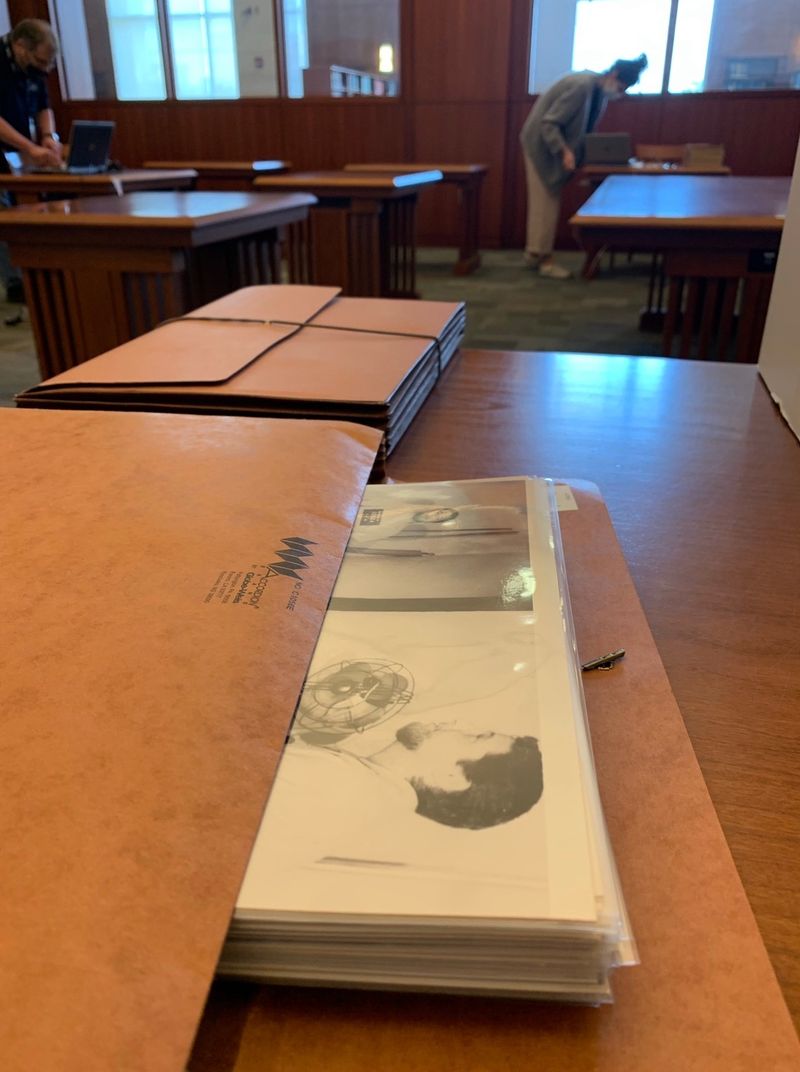
About an hour from my Jackson destination is a town called Philadelphia. I didn't know anything about Philadelphia, Mississippi until I spent hours in Jackson, Mississippi reading FBI case files concerning three young civil rights workers: James Chaney, Andrew Goodman, and Michael Schwerner. Perhaps you know they were murdered in 1964 and the state of Mississippi refused to prosecute the suspects, but almost no one knows the full story.
The United States didn't have a national civil rights act until 1964, a direct result of violence against civil rights activists. I'm familiar with part of the law, also called Title VII, but in eight years of legal practice, I can't remember filing more than one Title VII case. In most states, employees would use state, not federal, law but that's assuming a relevant state law exists. Despite using the 1964 civil rights law, I was unaware it contained eleven different sections. Only with the knowledge I gained in Mississippi did two sections of the law, 42 U.S. Code § 1985 and 41 USC § 1986, make awful sense. Before we continue, context is useful.
“No President has really done much for the American Negro, though the past two Presidents have received much undeserved credit for helping us. This credit has accrued to Lyndon Johnson and John Kennedy only because it was during their Administrations that Negroes began doing more for themselves. Kennedy didn't voluntarily submit a civil rights bill, nor did Lyndon Johnson. In fact, both told us at one time that such legislation was impossible.” -- Martin Luther King, Jr., Playboy Magazine, January 1969, pp. 232, published posthumously
In 1961, civil rights activists rode interstate buses through the segregated South to force bus companies to honor a Supreme Court case, Morgan vs. Virginia, which disallowed racial segregation on interstate buses. The case was decided in 1946, and the reason you don't know about it is because Rosa Parks and the Montgomery bus boycotts were the main catalysts in finally causing desegregated busing in 1956.
Yet, Mrs. Parks' journey began over a decade earlier, in 1943:
One day in 1943, Parks boarded a bus to register to vote. But the back of the bus was standing room only. Instead of stepping off to go to the back door after paying her fare in front, Parks walked down the aisle. The driver, James Blake, demanded that she disembark and re-board at the rear of the bus. Parks got off and waited for the next bus. (L.A. Times, Woo, 2005)
Twelve years later, 1955, is the year Mrs. Parks refused to give up her seat. Within two years, with the help of Martin Luther King, Jr. and many other activists, Montgomery, Alabama finally desegregated its buses.
If it took almost fourteen years to desegregate local Southern buses--which were financially dependent on African-American riders--the struggle for equal voting rights obviously would be harder.
One year after a bomb exploded at an Alabama church, another church was set on fire in Mississippi, and months later, the charred bodies of three young men were exhumed in Philadelphia, Mississippi.
Historians and mass media focused on the three young civil rights workers and the corrupt local sheriff. In doing so, they presented an incomplete picture that erased judicial corruption and FBI negligence. Yet, until the FBI's case files were declassified and made available to researchers, no one could reshape the prevailing narrative.
Most people hear "declassified" and believe truth will out, but declassification of materials is merely the first step in re-education. Many documents containing explosive information are somewhere online, but have not yet been seen by a researcher or a publisher.
Browse just two agency websites--the National Archives and the Office of the Historian--and you will soon realize it takes more than one lifetime to become a history expert. Moreover, even if relevant but obscure documents have been seen by a researcher or publisher, the path from personal to general knowledge is long, windy, and arduous. Understanding historical context requires taking the same journey as storytellers who've studied Kurosawa's Rashōmon: awe and humility are givens, but the angles never end.
FBI Background
Let's discuss the FBI. Ernest Hemingway called it "anti-Liberal, pro-Fascist, and dangerous [sic] of developing into an American Gestapo." (Source: Hemingway's FBI file, stamped July 17, 1961) At one point, Hemingway, who was running counterintelligence ops in Cuba on behalf of the United States, introduced an FBI agent as "a member of the American Gestapo." That same FBI agent warned J. Edgar Hoover that Hemingway "could tarnish the reputation of the FBI by portraying its agents as 'the dull, heavy-footed, unimaginative professional policeman type.'" (Memo to Hoover from Leddy, Hemingway's FBI file, August 13, 1943) Though the FBI surveilled Hemingway until his suicide, his own family and friends believed Hemingway had mental problems and paranoia. (Modernism on File, Writers, Artists, and the FBI, 1920-1950, edited by Claire A. Culleton and Karen Leick, 2008)
The FBI's antipathy towards writers extended beyond Hemingway. Hoover once called John Franklin Carter, an American columnist--who also happened to be President FDR's personal spy--"a crack-pot, a persistent busy-body, bitten with the Sherlock Holmes bug and plagued with a super-exaggerated ego." (March 1947) The hostility was mutual: "Carter... has always viewed the FBI as a fascist organization," wrote Hoover in September 1941. Ironically, Carter's individual research was sometimes more accurate than the FBI's, especially regarding Japanese-American residents during WWII.
Two writers, two charges of fascism against the same American law enforcement agency... but what does this have to do with Mississippi? If one cardinal lesson exists from the civil rights movement, it's that fear or hatred always begets fear and hatred, and the FBI's fear and paranoia of writers led to writers hating the FBI and the FBI becoming paranoid.
Here's the sad thing about it. Of course, a lot of blacks hate white people too. See, hatred always breeds hatred. -- Buford Posey (1977), called a "crack-pot" by locals, probable high-level informant. FBI document 44-2227 has witness implicating Buford and contains handwritten note, "Not to be used in report. Index only."
Leadership matters most when you don't have it, and under Hoover, the FBI's attempts to boost its reputation at others' expense had a purpose: to consolidate domestic intelligence operations under a single umbrella. Predictably, Hoover's overestimation of his own competence, underestimation of other agencies, and disregard for checks and balances backfired. Not only did the FBI antagonize more competent intelligence operators, particularly the OSS, its arrogance splintered the intelligence community in ways that still reverberate. The United States now has no fewer than 18 different intelligence entities, and thanks to Hoover's FBI, 21st century American intelligence might have become both too big to succeed and too paranoid to be useful.
"The really big story is the OSP. The Office of Special Plans. Turns out when [President] Bush wasn't getting the intelligence he wanted, Rumsfeld bypassed the CIA and set up his own intelligence unit. They fed raw unvetted intelligence to Bush and [Colin] Powell who lied us into a war!" -- Official Secrets (2019)
Mississippi Burning
Now that you know the FBI desired total control of domestic intelligence operations and was willing to pursue consolidation at any cost, its role in Mississippi will become clear. To be fair, the FBI was addressing a deliberate campaign to disrupt Mississippi politics, which included placing young white idealists in danger in order to force the media to pay attention.
"[B]y tradition, only white traffic deaths were considered worth submitting... none of us questioned the professional proposition that the loss of a white life had more news value than the loss of a black life." -- journalist Warren Hinckle, If You Have a Lemon, Make Lemonade (1974) pp. 31
The campaign to "break Mississippi" produced violent counter-reactions, and though Mississippi occupies an outsized place in American civil rights history, it was only one part of a Southern reform strategy. In 1961, a Greyhound bus carrying Freedom Riders was burned in Anniston, Alabama. In 1963, a Montgomery, Alabama church was firebombed, killing four little girls. In the summer of 1964, twenty black churches in Mississippi were burned to the ground. Nowhere and no one was off-limits, and just as the civil rights movement was planned, so was the violence. Plainclothes police--some of them Klan members--would first attack journalists accompanying Freedom Riders to prevent a record of violence. In Mississippi, on June 16, 1964, the sheriff burned down a church. Read that again: the sheriff, an American community's most independent law-and-order facilitator, burned down a church. His goal was to prevent its use by civil rights workers and to deploy violence to break the will of anyone who dared work with outside community organizers.
"'Barnett do the talkin' and [Sheriff] Rainey do the killin'.'" -- FBI 157-2346, 44-2227
This same sheriff, Lawrence Andrew Rainey, ordered Chaney, Schwerner, and Goodman's station wagon to be targeted on June 21, 1964, the night of their murders.
From FBI case files: "On the evening which the Mt. Zion Methodist Church was burned at around 9:00PM... I observed a 1960 black GMC pickup truck followed by four cars pass my home headed... toward the church... I also recognized the car following behind the pickup truck... in which Sheriff [Lawrence] Rainey was a passenger on Sunday." -- Geraldine Stewart, statement given July 14, 1964
Why were five cars headed to a church under the aegis of Neshoba County's sheriff? To attack church members. After a church meeting, the Klan ordered church officers out of their cars, then beat them outside their own church. Sheriff Rainey most likely trailed behind until only Klan members were present and then assisted in the burning and/or the covering up of clues/evidence.
"[Billy] Birdsong [a KKK member] related that all of the judges, lawyers and jury supervisors are Klansmen or Klan sympathizers in Neshoba County... the [KKK] group discussed the fact that any judge, prosecutor, District Attorney or juror would be on the side of the Klan in any attempt to prosecute a Klansman for racial violence or his participation in the killing of the three civil rights workers." -- FBI files describing Neshoba Meeting, Saturday, December 12, 1964
Some historians believe three civil rights workers arrived in Mississippi to secure affidavits regarding the church burning and were murdered to prevent further investigation. This causal chain is incorrect. Michael Schwerner arrived in Mississippi as a CORE field worker in January 1964--months before the Mt. Zion church burning.
"WHEREAS, as a result of the movement into the State of a group of individuals self-styled as the ' Freedom Riders', there appears to be imminent danger of a breach of the peace, resistance to the execution of the laws of the State, with threatened unlawful assembly and possibly violence and destruction to private property and loss of life..." -- Mississippi Executive Department Jackson Executive Order
Remember: a sustained, interstate effort to inject political normalcy into Southern politics was occurring, an effort that required local patience and trust, not only because many civil rights workers were non-black, but also because it takes time to organize and register voters. (Barack Obama, a well-paid lawyer, campaigned for President as a "community organizer" so as to associate himself with America's civil rights movement.)
“The future of the United States of America may well be determined here in Mississippi. For it is here that democracy faces its most serious challenge.” -- Martin Luther King, Jr.
Indeed, the main goal in 1964 was to register African-American voters, a revolutionary act in the South, where poll taxes and other barriers existed to deny equal voting rights.
"Any person attempting to register [to vote at the court clerk's office] ... during the sitting of the Circuit Court of Neshoba County is to be arrested for contempt of court." -- from FBI "MIBURN" Files
Schwerner, like other civil rights workers, entered Mississippi to register voters, but also organized boycotts and amassed information for the Congress of Racial Equality (CORE), a well-connected, well-funded organization based in Chicago, Illinois (where former President Obama established his political career). Chaney's car was leased by CORE from a company based in Syracuse, New York, indicating CORE's national presence.
CORE had been honing strategies since the 1940s, when it began using nonviolent tactics to desegregate interstate buses. The publicity it received in the 1940s generated financial and legal support, which allowed CORE--the inventor of the "Freedom Ride" slogan--to attempt similar strategies in the deep South in the 1960s. Its efforts gained the FBI's attention, and CORE was one of the groups targeted by COINTELPRO.
Hatred and Fear
Other than obvious charges of agitation, what inspired such fear and hatred against CORE's Southern involvement? First and foremost, though Schwerner and Goodman appear white, the political establishment in Mississippi viewed them as anything but. Second, Sheriff Rainey was protecting his cut of illegal whiskey sales: the "Sheriff's Office has at least two 'collection men' whose function is to collect money from Negro cafe owners who illegally sell whiskey... [one of the owners is] employed by the Coca-Cola Bottling Company." (FBI Files) Third, many people, including the FBI, believed the men's disappearance was a hoax perpetuated by godless Communists.
The aims and purposes of the White Knights of the KKK of Mississippi, which splintered from Louisiana's Original Knights of the KKK, "are to preserve Christian civilization, protect and promote white supremacy and the segregation of the races, to fight Communism and to extend the dignity, heritage, and rights of the white race of America."
Hatred and fear are rarely driven by logic. Schwerner was despised in part because he looked different from anyone locals had ever seen. One witness stated, "this was the first time she had ever met a white man with a beard such as SCHWERNER had, and up to this point she had thought that SCHWERNER was a Negro."
More at https://lononaut.substack.com/p/mississippi-burning-redux
© Matthew Mehdi Rafat (written in 2021, self-published in July 2022 after numerous submissions to domestic and international journals were rejected)